

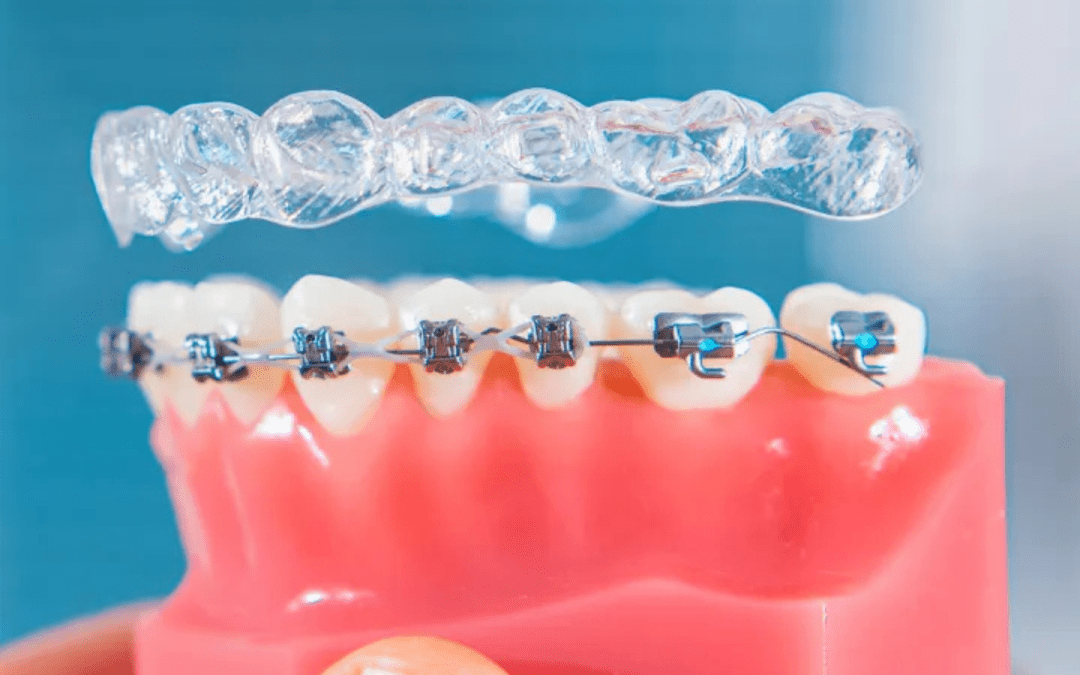
Choosing to straighten your teeth is a significant decision that impacts your daily life and your future confidence. Many people in SoHo find themselves weighing the benefits of discreet aligners against the time-tested reliability of metal brackets. The process often begins with a desire to correct crowding or gaps, but the path to a perfect smile depends on understanding how each system interacts with your dental anatomy. Deciding between clear aligners and metal brackets involves more than just looking at the price tag or the aesthetic. It is about understanding how each system moves your teeth and what level of responsibility you are ready to take on during the process.
At Sunny Dental Care, our team focuses on providing personalized assessments to determine the most effective path for your specific needs. Whether you are looking for a nearly invisible solution or a robust system for complex movement, there is a modern orthodontic path tailored to your lifestyle.
The Science of Orthodontic Alignment
Orthodontics has come a long way from the bulky hardware of the past. Today, both traditional braces and clear aligners are more efficient and comfortable than ever before. According to the National Institutes of Health (NIH), orthodontic treatment is not just about aesthetics; correcting malocclusion can significantly improve oral health by making teeth easier to clean and reducing the risk of gum disease. When teeth are crowded or poorly spaced, they create tiny pockets where plaque can hide, regardless of how well you brush.
Dr. Wonseok Jang explains that early diagnosis can prevent many complex dental problems. By choosing the right orthodontic method now, you can avoid uneven wear on your teeth and potential jaw pain in the future. We believe that while technology is a great tool, the expertise of the dental team is what truly ensures a successful outcome.
Comparing Invisalign and Traditional Braces
Both systems have their unique strengths. Depending on your dental needs and your daily routine in SoHo, one may clearly outweigh the other. We often look at these as two different tools in a toolkit, each designed for a specific type of repair.
The Discreet Appeal of Invisalign
Invisalign uses a series of clear, plastic trays that gradually shift your teeth into place. The most obvious benefit is that they are virtually invisible. For many professionals, this means they can go about their careers in SoHo without anyone realizing they are undergoing treatment. This stealth approach is perfect for weddings, public speaking, or media appearances.
Another major advantage is that the trays are removable. You can take them out to eat, brush, and floss. This means there are no dietary restrictions and no struggling with special threaders to keep your teeth clean. However, this freedom requires discipline. To be effective, aligners must be worn for at least 22 hours a day.
Learn more about our Invisalign service here.
The Reliable Power of Traditional Braces
Traditional braces consist of metal or ceramic brackets bonded to the teeth and connected by wires. While they are more visible than aligners, they are incredibly powerful. Braces are often the preferred choice for complex structural changes, such as severe rotations or closing large gaps that aligners might struggle to grip. Modern brackets are much smaller and more streamlined than they used to be, and ceramic options can blend in with the natural color of your teeth.
Because braces are fixed to your teeth, they work 24/7 without you having to remember to put them back in. This makes them an excellent choice for younger patients or busy adults who do not want to track their daily wear time.
Explore our full list of dental services here.
Solving the Alignment Puzzle in SoHo
When you visit our office for a consultation, we look at several factors to help you solve the puzzle of your smile. These include the complexity of your case, your timeline, and your personal habits.
- Complexity: Severe bite issues or significant tooth height adjustments often favor the mechanical leverage of traditional braces.
- Maintenance: Braces require careful cleaning around brackets, while Invisalign requires cleaning the trays and your teeth after every meal.
- Comfort: While both cause some initial soreness as teeth move, Invisalign generally has fewer emergency visits for broken wires or poking brackets.
The goal is to find a treatment that integrates seamlessly into your life while delivering a stable, long-term result. Many patients find that the predictable force of braces provides peace of mind, while others find that the flexibility of clear aligners is the only way to fit orthodontics into a busy schedule.
Practical Tips for Orthodontic Success
Regardless of which option you choose, your cooperation is the biggest factor in how quickly you finish. Our dental team recommends these actionable steps:
- Keep a travel kit: If you choose Invisalign, Dr. Wonseok Jang recommends keeping a small kit with a toothbrush and case with you at all times. Never wrap your aligners in a napkin, as they are easily thrown away in SoHo restaurants.
- Avoid sticky foods: If you have traditional brackets, stay away from hard candies or sticky snacks that can pull a bracket loose and set your progress back.
- Prioritize hygiene: Brushing after every meal is non negotiable. Food trapped against teeth for long periods can cause staining or decay.
- Wear your retainer: Once your treatment is finished, your teeth will want to move back. Wearing a retainer as directed is the only way to protect your investment.
Check out our preventative care tips here to keep your smile bright during treatment.
Frequently Asked Questions
Q: Is Invisalign faster than traditional braces?
A: Not necessarily. In simple cases, Invisalign can be very quick, but for complex movements, traditional braces are often more efficient. Dr. Wonseok Jang will give you an estimated timeline for both options during your visit.
Q: Can I still play sports with braces or Invisalign?
A: Absolutely. If you have braces, we recommend an orthodontic mouthguard. If you use Invisalign, you can simply wear your trays or a standard mouthguard during play.
Q: Will I have a lisp during treatment?
A: Some patients experience a very slight lisp for the first few days of wearing Invisalign or after getting braces, but your tongue quickly adjusts to the new hardware.
Q: How often do I need to visit the clinic in SoHo?
A: Generally, you will see us every 4 to 8 weeks so we can monitor your progress and provide your next set of aligners or adjust your wires.
Conclusion
There is no one-size-fits-all answer when it comes to straightening your teeth. Whether the transparency of Invisalign or the precision of traditional braces is right for you depends on your unique goals and dental needs. At Sunny Dental Care, we take pride in helping our SoHo neighbors navigate these choices to find the path that leads to a healthy, beautiful smile. If you are ready to explore your options and solve your dental concerns, Contact Sunny Dental Care in SoHo today to schedule your comprehensive orthodontic consultation and take the first step toward the smile you have always wanted.
Recent Comments