

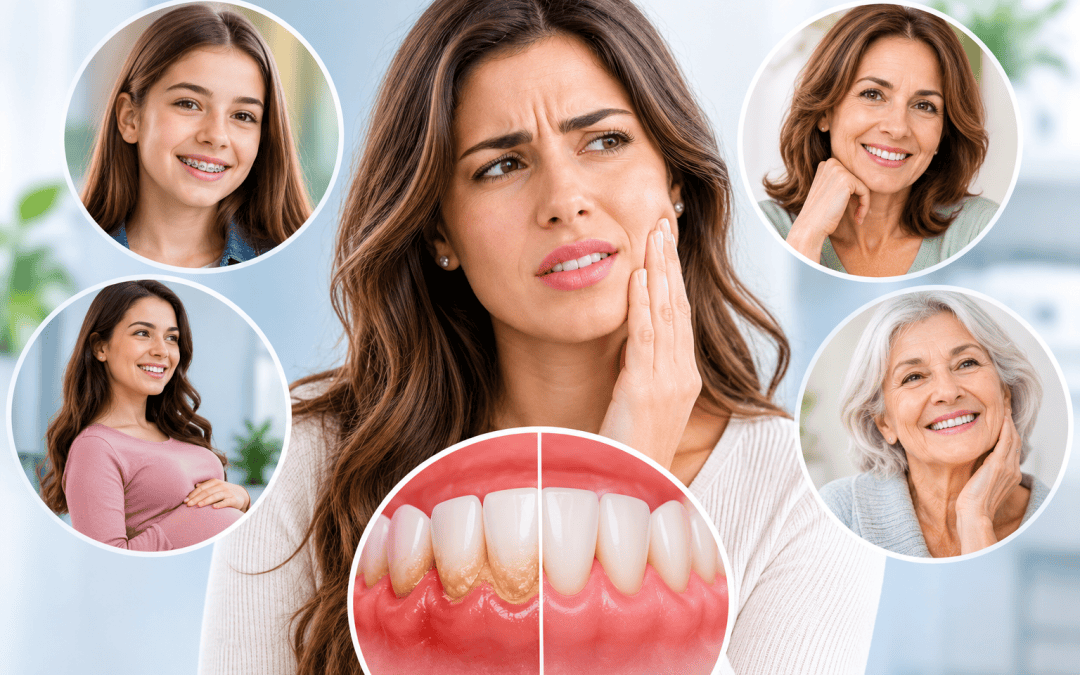
Gum health can change throughout a woman’s life. While plaque buildup and oral hygiene remain major factors in the development of gum disease, hormonal changes can also influence how gum tissues respond to bacteria and inflammation.
From puberty and pregnancy to menopause and beyond, changes in hormone levels can affect blood flow to the gums, tissue sensitivity, saliva production, and the body’s inflammatory response. As a result, some women may notice changes in their gums at particular stages of life even when their daily oral hygiene routine has not changed significantly.
Understanding these changes can help women recognize potential warning signs and seek dental care when needed.
At Sunny Dental Care, Dr. Wonseok Jang evaluates gum health as part of comprehensive dental care and provides personalized recommendations based on each patient’s oral health needs.
How Do Hormones Affect Gum Health?
Hormones such as estrogen and progesterone can influence the tissues throughout the body, including the gums. During periods when hormone levels fluctuate, gum tissues may become more sensitive to plaque and bacteria.
This does not mean hormonal changes directly cause gum disease. Instead, they can alter the way the gums respond to existing plaque buildup.
You may notice symptoms such as:
- Red or swollen gums
- Bleeding while brushing or flossing
- Increased gum sensitivity
- Tenderness around certain teeth
- Changes in the way your gums look or feel
- Increased plaque-related inflammation
Good oral hygiene and regular dental examinations remain important throughout every life stage.
Gum Health During Puberty
Puberty is one of the first major periods when hormonal changes can influence gum health. As hormone levels increase, the gums may become more reactive to plaque.
Teenagers may therefore experience more noticeable gum inflammation even when the amount of plaque present is relatively small.
During puberty, it is particularly important to establish consistent oral hygiene habits.
Helpful habits include:
- Brushing twice a day with fluoride toothpaste
- Cleaning between teeth regularly
- Limiting frequent sugary snacks and drinks
- Drinking plenty of water
- Attending routine dental examinations
- Telling your dentist about persistent gum bleeding or discomfort
If bleeding continues despite improved oral hygiene, a dental examination can help determine whether gingivitis or another periodontal concern is present.
Gum Disease During the Reproductive Years
Throughout the reproductive years, hormonal fluctuations can occur during the menstrual cycle, pregnancy, and other periods of hormonal change.
Some women may notice that their gums feel more sensitive or bleed more easily at certain times. These changes can occur because hormone fluctuations may affect the gums’ response to plaque.
Maintaining consistent oral hygiene is especially important during these periods.
If you notice recurring gum swelling, bleeding, or tenderness, do not assume that hormones are the only explanation. Plaque buildup, gingivitis, periodontal disease, dental restorations, and other oral health conditions can also contribute to gum symptoms.
Pregnancy and Gum Health
Pregnancy is one of the most noticeable periods of hormonal change. Increased levels of pregnancy-related hormones can make the gums more sensitive to plaque.
This may contribute to a condition commonly known as pregnancy gingivitis, which can cause:
- Red or swollen gums
- Increased gum tenderness
- Bleeding during brushing or flossing
- Increased sensitivity around the gumline
Pregnancy does not mean that gum problems are unavoidable. Maintaining daily oral hygiene and continuing appropriate dental care can help manage plaque and support healthy gums.
If you are pregnant, let your dental team know. They can take your pregnancy into account when planning examinations, preventive care, and any necessary treatment.
Why Dental Care During Pregnancy Matters
Pregnancy can make some women more aware of their oral health because gum changes become easier to notice. However, routine dental care should not be viewed as something that needs to be completely postponed during pregnancy.
If you have persistent tooth pain, significant gum swelling, bleeding, or another dental concern, speak with your dentist rather than waiting until after delivery.
Your dentist can assess your condition and determine what care is appropriate based on your individual circumstances and stage of pregnancy.
Gum Health During Perimenopause
Perimenopause is the transitional period before menopause, when hormone levels can fluctuate considerably.
During this stage, some women may notice changes in their oral health, including:
- Dry mouth
- Increased gum sensitivity
- Changes in taste
- Burning or uncomfortable sensations in the mouth
- Increased awareness of gum irritation
Dry mouth can be particularly important because saliva helps protect the teeth and maintain a balanced oral environment. Reduced saliva can contribute to a greater risk of tooth decay and oral discomfort.
If you experience persistent dryness or changes in your mouth during perimenopause, mention them during your dental appointment.
Menopause and Gum Health
During menopause, declining estrogen levels can contribute to changes in oral tissues and saliva production.
Some women may experience dry mouth, increased sensitivity, or discomfort around the gums. A dry mouth can make it more difficult to maintain oral comfort and may increase susceptibility to tooth decay.
However, not every woman experiences the same symptoms.
Maintaining good oral hygiene, drinking water regularly, addressing persistent dry mouth, and attending routine dental examinations can help protect oral health during and after menopause.
Can Menopause Increase the Risk of Gum Disease?
Menopause itself does not automatically mean that a woman will develop gum disease. However, hormonal changes, dry mouth, age-related factors, medications, existing periodontal problems, and changes in oral hygiene can all influence gum health.
For women who already have periodontal disease, continuing professional monitoring is particularly important.
A dental examination can help assess gum inflammation, plaque and tartar buildup, gum recession, and the condition of the tissues supporting the teeth.
What About Gum Recession as Women Age?
Gum recession can occur at different ages and is not simply a normal consequence of getting older.
Several factors can contribute to receding gums, including periodontal disease, aggressive brushing, tooth position, and other individual factors.
Receding gums can expose more of the tooth root, which may increase sensitivity and make certain areas more difficult to clean.
If you notice that your teeth appear longer, your gums are pulling away from your teeth, or you experience increased sensitivity, schedule a dental evaluation.
How Can Women Protect Their Gums at Every Life Stage?
Although hormonal changes can influence gum tissues, many of the fundamentals of gum care remain the same throughout life.
A consistent routine should include:
- Brush twice daily: Use a soft-bristled toothbrush and fluoride toothpaste.
- Clean between your teeth: Floss or use another appropriate interdental cleaning method every day.
- Pay attention to bleeding: Persistent bleeding should be evaluated rather than ignored.
- Stay hydrated: Adequate water intake can support oral comfort, particularly if you experience dry mouth.
- Avoid tobacco: Tobacco use increases the risk of periodontal disease and can interfere with gum health.
- Attend regular dental examinations: Your dentist can identify changes before they become more advanced.
When Should You See a Dentist About Your Gums?
Occasional irritation does not necessarily mean that you have periodontal disease. However, persistent or recurring symptoms deserve professional attention.
Schedule a dental evaluation if you notice:
- Frequent bleeding when brushing or flossing
- Persistent gum swelling or redness
- Gum tenderness
- Receding gums
- Persistent bad breath
- Loose or shifting teeth
- Changes in the way your teeth fit together
- Pus or swelling around the gums
Early evaluation can help determine whether the problem is related to gingivitis, periodontal disease, hormonal changes, dry mouth, or another dental concern.
Gum Health Changes, But Your Oral Care Should Not
Women’s oral health can change throughout different life stages, and hormonal fluctuations may influence how the gums respond to plaque and bacteria. Puberty, pregnancy, perimenopause, and menopause can each bring different considerations.
However, hormonal changes should not be used to explain away persistent bleeding, swelling, or discomfort. These symptoms can also indicate gum disease or another dental problem that requires attention.
At Sunny Dental Care, Dr. Wonseok Jang provides personalized dental evaluations to help patients understand changes in their gum health and receive appropriate care.
If you are experiencing bleeding gums, sensitivity, swelling, or other changes in your oral health, schedule an appointment at our Lower Manhattan office. We proudly serve patients from SoHo, Tribeca, Greenwich Village, and surrounding areas, with Sunday appointments available for your convenience.
Frequently Asked Questions
Why do my gums bleed more during pregnancy?
Hormonal changes during pregnancy can make gum tissues more sensitive to plaque, which may increase inflammation and bleeding. This is commonly referred to as pregnancy gingivitis. Good oral hygiene and appropriate dental care can help manage gum inflammation during pregnancy.
Is bleeding gums during menopause normal?
Gum changes can occur during menopause, but persistent bleeding should not simply be considered a normal part of aging. Hormonal changes, dry mouth, plaque buildup, periodontal disease, and other factors can contribute to gum symptoms. A dental examination can help identify the underlying cause.
Can hormonal changes cause gum disease?
Hormonal changes do not directly cause gum disease. However, they can affect how gum tissues respond to plaque and may increase inflammation or sensitivity during certain life stages. Plaque control and regular dental care remain important for preventing and managing gum disease.
Does menopause cause dry mouth?
Hormonal changes around menopause may be associated with dry mouth in some women. Medications and other health factors can also contribute. If dry mouth is persistent, discuss it with your dentist so potential causes and management strategies can be considered.
When should I see a dentist about bleeding gums?
If your gums bleed regularly when brushing or flossing, become swollen or tender, or show other persistent changes, schedule a dental examination. Your dentist can determine whether the symptoms are related to plaque-induced gingivitis, periodontal disease, hormonal changes, or another oral health concern.
Recent Comments