
Waking up exhausted despite a full night’s sleep, struggling with daytime fatigue, or hearing complaints about chronic, loud snoring are all hallmark signs of Obstructive Sleep Apnea (OSA). This common condition occurs when the muscles and soft tissues in the back of the throat relax during sleep. That relaxation temporarily blocks the airway and disrupts healthy oxygen flow.
Left untreated, sleep apnea does more than drain your energy. It can increase your risk of high blood pressure, heart disease, and daytime accidents. Fortunately, effective treatments are available to keep your airway open so you can enjoy restful, uninterrupted sleep.
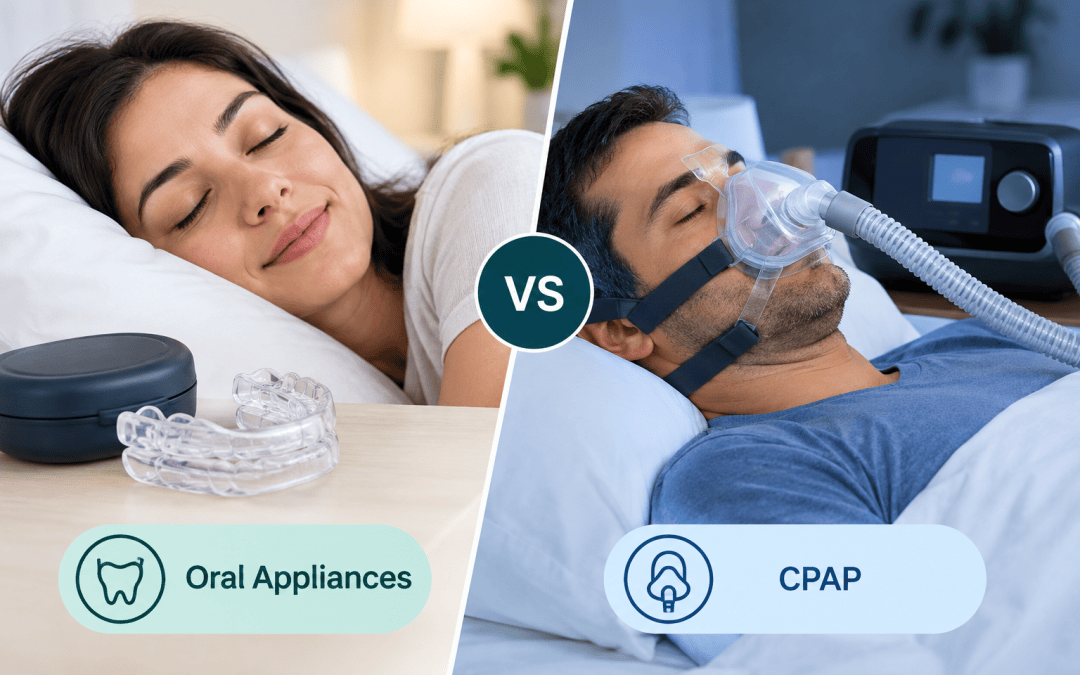
CPAP vs Oral Appliance Therapy: The Two Main Options
For years, Continuous Positive Airway Pressure (CPAP) therapy has been the primary recommended treatment. Modern dental sleep medicine now offers a quiet, portable, and comfortable alternative: Oral Appliance Therapy (OAT). In fact, your dentist is often the first provider to spot signs of sleep apnea during a routine exam. Understanding the differences between oral appliance therapy vs CPAP helps you choose the treatment that best aligns with your daily routine and health goals.
What Is CPAP Therapy?
Continuous Positive Airway Pressure (CPAP) involves wearing a mask over your nose, mouth, or both while you sleep. The mask connects via a flexible hose to a small bedside machine. That machine delivers a constant stream of pressurized room air, which acts as a “pneumatic splint” and prevents your airway tissues from collapsing.
Pros of CPAP:
- Highly effective for all levels of sleep apnea, including severe cases
- Precisely adjustable air pressure settings based on medical sleep studies
- Monitors nightly compliance and breathing patterns automatically
Common CPAP Challenges:
- Machine noise and hose restrictions can disrupt sleep positions or disturb your partner
- Masks may cause facial skin irritation, dry nose or mouth, or feelings of claustrophobia
- Requires daily cleaning, power outlets, and distilled water, making travel cumbersome
What Is Oral Appliance Therapy (OAT)?
Oral Appliance Therapy uses a custom-made dental device, similar in size and appearance to a nightguard or orthodontic retainer, worn only while you sleep. Designed by a trained dentist, the most common type is a Mandibular Advancement Device (MAD).
It works by holding your lower jaw (mandible) and tongue in a slightly forward position. This subtle shift prevents soft tissues from falling back into the throat. That keeps the airway clear and eliminates chronic snoring.
Pros of Oral Appliance Therapy:
- Comfortable & Unobtrusive: Easy to wear without face straps or masks
- 100% Silent: Eliminates motor noise for a quiet sleep environment for both you and your bed partner
- Travel-Friendly: Fits neatly into a small protective case — no cords, outlets, batteries, or distilled water required
- High Compliance: Because appliances are comfortable and simple to use, patients wear them far more consistently every night
Considerations for Oral Appliances:
- Primarily recommended for mild-to-moderate obstructive sleep apnea or CPAP-intolerant patients
- Requires professional fitting and periodic adjustments by a dentist to protect jaw joint health and bite alignment
How Oral Appliances and CPAP Compare Across Key Areas
How They Work: Oral appliances hold your lower jaw slightly forward to mechanically open the throat. CPAP uses a continuous stream of pressurized air to hold the airway open pneumatically.
Best Suited For: Oral appliances are ideal for mild to moderate OSA, primary snoring, or CPAP-intolerant patients. CPAP is typically required for severe OSA, complex sleep apnea, or high oxygen drops.
Portability: Oral appliances fit easily into a handbag or small pocket case. CPAP requires a dedicated carrying case, power cord, and distilled water.
Noise Level: Oral appliances are completely silent. CPAP produces a low motor hum along with potential air leak noise.
Maintenance: Oral appliances require simple daily rinsing and brushing with mild soap. CPAP requires daily cleaning of the mask, hose, water chamber, and filters.
How to Know Which Treatment Suits Your Lifestyle
The ideal sleep apnea treatment is the one you will actually use every night. Consider these factors when deciding:
- Severity of Your Sleep Apnea: A diagnostic sleep study determines whether your condition is mild, moderate, or severe. Severe cases often require CPAP. Mild-to-moderate cases respond exceptionally well to custom oral devices.
- Frequency of Travel: If you travel frequently for work, enjoy camping, or take frequent flights, packing a compact oral appliance is far simpler than managing a CPAP setup.
- CPAP Tolerance: If you’ve tried CPAP before but abandoned it due to noise, claustrophobia, nasal congestion, or uncomfortable masks, an oral appliance offers a proven medical alternative.
- Bed Partner Comfort: Oral appliances eliminate machine hum and mask leaks. That restores a quiet, undisturbed environment for light sleepers.
Getting Started with Custom Oral Appliance Therapy
Getting fitted for an oral appliance is a smooth, gentle process for new patients:
- Evaluation & Sleep Study Review: Your dentist reviews your sleep study results and evaluates your jaw joint (TMJ) and teeth.
- Digital Impressions: Precise 3D scans or impressions of your upper and lower teeth are taken to design a comfortable, custom fit.
- Custom Fitting & Calibration: Once crafted, your appliance is fitted and calibrated to advance your jaw safely to the optimal therapeutic position.
- Follow-Up Care: Regular check-ins ensure maximum comfort, effective breathing support, and stable jaw alignment over time.
Conclusion
Both CPAP and oral appliances offer life-changing benefits by restoring restful sleep and protecting your health. But if bulky equipment, mask discomfort, or machine noise keeps you from using your CPAP consistently, custom Oral Appliance Therapy can offer a comfortable, silent, and effective solution that fits your everyday lifestyle.
At Sunny Dental Care, Dr. Wonseok Jang evaluates your unique dental anatomy to design custom oral appliances tailored to your needs. If you live or work in SoHo, Tribeca, Greenwich Village, or Lower Manhattan, contact our clinic today to schedule your consultation. We’re conveniently open on Sundays for your scheduling convenience.
Frequently Asked Questions on Oral Appliances vs. CPAP
Q: Is a custom oral appliance effective for snoring?
A: Yes. Oral appliances are exceptionally effective at treating primary snoring. By keeping your lower jaw forward and maintaining an open airway, they eliminate the tissue vibration that causes loud snoring.
Q: Can I use an over-the-counter “boil-and-bite” mouthguard for sleep apnea?
A: Over-the-counter guards are not recommended for sleep apnea. Unregulated OTC guards can permanently shift your bite, cause severe jaw joint (TMJ) pain, and lack the precise calibration needed to keep your airway open safely.
Q: How long does a custom sleep apnea oral appliance last?
A: With proper care, routine cleaning, and regular dental checkups, a high-quality custom oral appliance typically lasts between 3 to 5 years before needing replacement or hardware refurbishing.
Q: Does medical insurance cover oral appliance therapy?
A: Many medical insurance plans (and Medicare) provide coverage for custom oral appliances when prescribed by a doctor for diagnosed obstructive sleep apnea, particularly for patients with mild-to-moderate OSA or documented CPAP intolerance.
Recent Comments